Why water-soluble labels are useful in busy kitchens
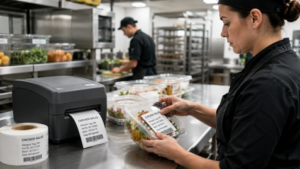
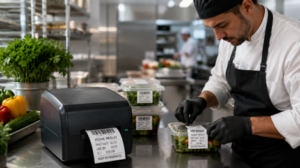
Food service teams label containers throughout the day. Prepared ingredients, sauces, prepped items, leftovers, and short-term storage containers all need clear identification so teams can manage food rotation, reduce confusion, and keep service moving.
Traditional adhesive labels can create extra work when containers are reused. Staff may need to scrape labels, remove sticky residue, or spend additional time cleaning containers before they can return to service.
Water-soluble labels offer a cleaner alternative for short-term labeling. They are designed to dissolve during washing, helping teams label reusable containers clearly and then remove the label without scraping or harsh chemicals.
How water-soluble labels work
Water-soluble labels are made for temporary use on reusable containers and food preparation items. Once the container is washed, the label breaks down and rinses away with water.
In many cases, the label can dissolve quickly when immersed or washed. If full immersion is not practical, a wet cloth can also help remove the label from the container surface.
This makes water-soluble labels especially useful for kitchens that reuse containers throughout the day and need a faster way to keep containers clean, organized, and ready for the next use.
Where these labels can be used
Water-soluble labels can be used across many food service and hospitality workflows. They are commonly applied to reusable containers, pans, jars, tubs, and storage items that need temporary identification.
- Food preparation containers
- Ingredient bins and storage tubs
- Reusable stainless-steel pans
- Plastic food containers
- Glass jars and bottles
- Back-of-house kitchen storage
- Hospitality and catering operations
- Food rotation and date labeling workflows
Because they can be applied to common food service surfaces such as plastic, glass, stainless steel, and other kitchen materials, they are a practical option for daily back-of-house use.
Saving time during container washing
One of the biggest advantages of water-soluble labels is the reduction of cleanup time. Instead of scraping adhesive from containers or dealing with label residue, kitchen staff can wash the container and allow the label to dissolve away.
This can make a noticeable difference in high-volume food service environments where containers cycle through preparation, storage, service, washing, and reuse multiple times per day.
When labels come off cleanly, staff can spend less time on manual cleanup and more time on food preparation, service, and maintaining kitchen flow.
Reducing residue and supporting hygiene
Adhesive residue can be frustrating in a commercial kitchen. It can make containers look untidy, collect debris, and require extra cleaning before the container can be reused.
Water-soluble labels are designed to wash away without leaving sticky residue. This helps support cleaner containers and more consistent hygiene practices in food preparation areas.
For kitchens focused on food safety, clean labeling workflows matter. Labels should help teams identify food clearly without creating extra cleanup problems after use.
Environmental and operational benefits
Water-soluble labels can also support more responsible kitchen operations. By reducing the need for scraping, adhesive removers, and extra cleaning effort, they help create a smoother workflow around reusable containers.
- Labels dissolve during washing
- No need for scraping or harsh removal chemicals
- Less adhesive residue on reusable containers
- Cleaner appearance compared with labels that leave residue
- Useful for short-term labeling and food rotation
- Helps reduce time spent preparing containers for reuse
For businesses that rely on reusable containers, these benefits can improve both the cleanliness and efficiency of daily operations.
Choosing the right label for the application
Water-soluble labels are best suited for temporary labeling. They are ideal when the label only needs to remain on the container until the next wash cycle.
For longer-term labeling, freezer storage, shipping, outdoor use, or applications requiring durability over time, a different label material may be more appropriate. The right choice depends on the surface, environment, label lifespan, printer type, and food service workflow.
Southern Barcode can help businesses choose the correct label material for water-soluble applications, food rotation, date labeling, barcode printing, and reusable container workflows.
A smarter labeling workflow for reusable containers
Water-soluble labels are a simple but effective way to improve temporary labeling in food service. They help teams label containers clearly, wash containers more efficiently, and reduce the mess caused by traditional adhesive labels.
For restaurants, hotels, catering teams, commercial kitchens, and food preparation operations, dissolvable labels can save time, support cleaner workflows, and make reusable container labeling easier to manage.