Why handwritten labels create problems in food operations
Food labeling is a critical part of daily operations for restaurants, hotels, commercial kitchens, grab-and-go programs, and food service businesses. Labels help teams identify prepared food, track use-by dates, communicate allergen information, and keep kitchen workflows organized.
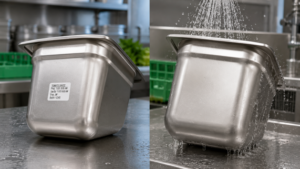
In busy food environments, handwritten labels can create avoidable problems. They take time to write, they can be inconsistent from one employee to another, and they may be difficult to read if the handwriting is unclear or if the ink smears.
When food labeling depends entirely on manual handwriting, small mistakes can become operational risks. A missing ingredient, an unclear date, or a label that cannot be read quickly can affect food safety, inventory control, and customer confidence.
The limits of handwritten food labels
Handwritten labels may seem simple, but they often create friction in fast-moving kitchens. Employees may spend extra time writing product names, preparation dates, expiration dates, initials, and other required details by hand.
Some teams also add drawings, symbols, or informal notes to labels. While this may seem harmless, it can slow down the labeling process and make labels less consistent across shifts.
Food businesses need labels that are clear, standardized, and easy to understand. When every label looks different, teams may lose time trying to interpret information that should be immediately obvious.
Common issues with manual labeling
Handwritten labels can be affected by several everyday problems. Ink can smear before it dries, dates can be written in different formats, and numbers or letters can be misread. For example, a poorly written number can create confusion when reading use-by dates or production times.
If the person who wrote a label is no longer on shift, it may be difficult to confirm what the label means. This creates uncertainty for the rest of the team and increases the chance of waste, relabeling, or incorrect product handling.
- Labels can be difficult to read
- Ink may smear or fade
- Dates and times may be written inconsistently
- Ingredients or allergens may be missed
- Spelling mistakes can create confusion
- Staff may spend unnecessary time handwriting repetitive information
Food safety and brand risk
Accurate labeling matters because food businesses rely on labels to manage food rotation, shelf life, preparation dates, and expiration dates. If a product is mislabeled or served after its intended use-by date, the consequences can be serious.
Food safety incidents can damage customer trust and create financial loss for a business. For brands that have taken years to build a reputation, a preventable labeling error can become a costly operational problem.
Clear, consistent labeling helps teams reduce uncertainty. It also supports better communication between employees, especially when multiple people handle the same ingredients or prepared food throughout the day.
Why automation is a better approach
Automated food labeling gives kitchen teams a faster and more reliable way to print labels. Instead of handwriting the same information repeatedly, staff can use a touchscreen system or connected software to generate labels with consistent product names, preparation dates, use-by dates, ingredients, and other important details.
This type of labeling workflow can help reduce manual errors while saving time. It also supports better food rotation, clearer inventory tracking, and more consistent communication across the kitchen.
For businesses handling grab-and-go foods, prepared meals, or packaged items, automated labeling can also help present information more clearly for customers, including allergen, calorie, nutrition, and product details where required.
Benefits of replacing handwritten labels
- More legible labels for kitchen teams and customers
- Reduced risk of handwriting and spelling errors
- Faster labeling for prepared food and grab-and-go items
- More consistent use-by and expiration date information
- Better support for allergen and ingredient communication
- Improved food rotation and inventory visibility
- Less time spent on repetitive manual labeling tasks
A smarter workflow for food labeling
Replacing handwritten labels is not only about making labels look better. It is about creating a more reliable process for food safety, kitchen productivity, and operational consistency.
With the right labeling technology, food businesses can reduce time spent on manual tasks, improve label accuracy, and give teams a clearer way to manage prepared food throughout the day.
For restaurants, hotels, commercial kitchens, and food service operations, automated labeling is a practical step toward safer and more efficient back-of-house workflows.